Why Moisture Separator is Essential for a Reliable Compressed Air System
Compressed air is often referred to as the “fourth utility” in modern industries. However, compressed air naturally contains moisture, which can cause serious problems if not removed before reaching your equipment. Excess moisture leads to corrosion, product contamination, reduced equipment life, and increased maintenance costs.
A Moisture Separator is one of the most important components of a compressed air system. It efficiently removes water droplets and condensate from compressed air, ensuring clean, dry, and reliable air for industrial applications.
At Loitha Air Compressor, we provide high-quality moisture separators designed to improve system efficiency, protect valuable equipment, and reduce operational downtime.
What Is a Moisture Separator and Why Do You Need It?
A Moisture Separator is a heavy-duty mechanical device installed directly into your compressed air pipeline. Its primary job is to isolate and remove liquid water droplets, bulk oil mist, and large particulate contaminants from the airstream before they travel downstream.
The Science: Why Does Compressed Air Contain Water?
Atmospheric air naturally holds ambient water vapor. When a compressor draws this air in and compresses it, two things happen simultaneously:
- The air temperature spikes dramatically.
- The concentration of water vapor multiplies.
As this hot, compressed air begins to cool down in the piping network, the vapor rapidly condenses into liquid water. Without an intervention point, gallons of water will flood your air lines daily.
How Does a Moisture Separator Work?
A moisture separator operates using centrifugal force and directional airflow.
The compressed air enters the separator at high speed, where specially designed internal vanes create a spinning motion. The heavier water droplets are forced toward the outer wall of the separator due to centrifugal force. These droplets collect at the bottom of the separator and are discharged through a drain valve, while clean compressed air exits the outlet.
This simple yet highly effective process removes a significant percentage of liquid water before it reaches filters, air dryers, or production equipment.
The Key Benefits of Installing a Moisture Separator
Investing in a quality separator pays off immediately across your entire production floor:
- Protects Pneumatic Equipment: Stops rust and internal pitting in pneumatic cylinders, valves, actuators, and air tools, dramatically extending their lifespan.
- Improves End-Product Quality: In sectors like food processing, pharmaceuticals, or automotive painting, a single drop of water can ruin an entire batch of product or spoil a paint finish.
- Slashes Maintenance Costs: Fewer moisture-related component failures mean fewer emergency repairs and less production line stoppage.
- Boosts Air Dryer Efficiency: Placing a separator before a refrigerated or desiccant air dryer removes bulk liquid first. This lowers the workload on your dryer, saving energy and extending the life of your filtration media.
- Reduces Pressure Drops: Eliminating standing water in pipelines keeps your air pathways clear, lowering energy consumption because your compressor doesn’t have to work harder to fight pipeline resistance.
Where Should It Be Installed?
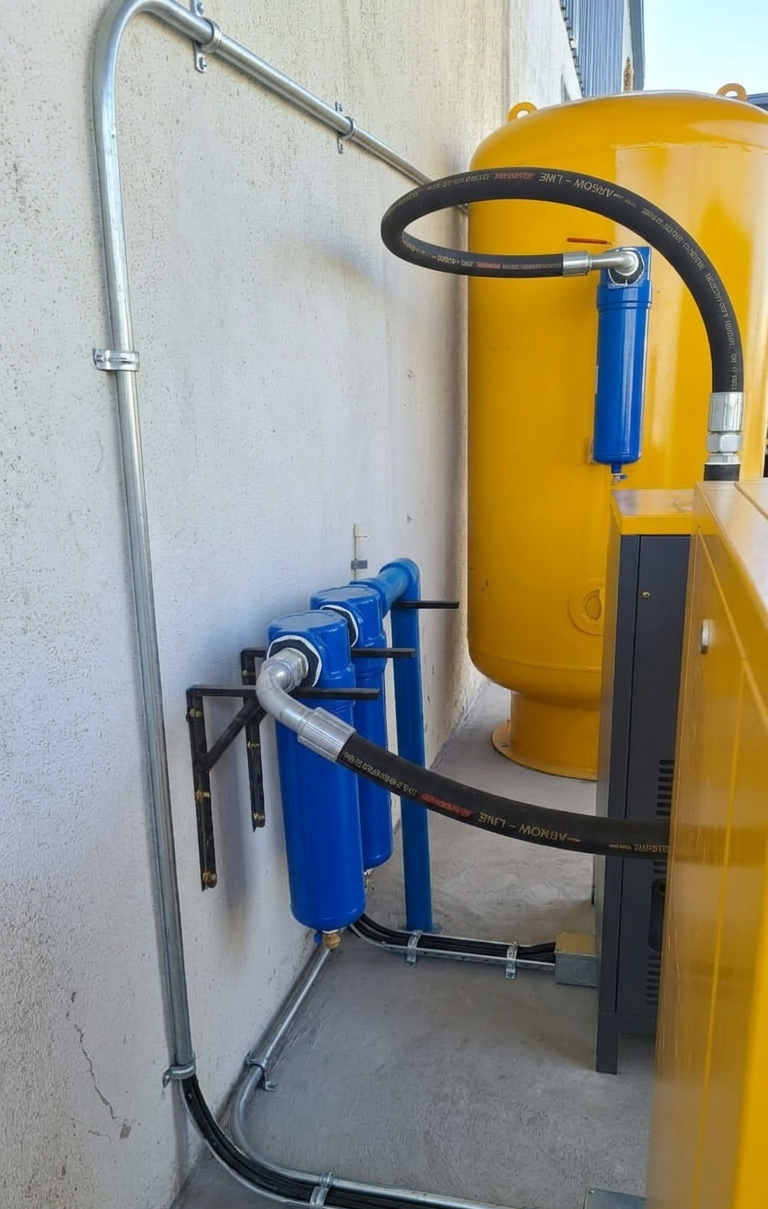
To maximize water extraction, placement is everything. For optimum performance, a moisture separator should be installed:
Immediately after the air compressorAfter the aftercoolerBefore the air dryerBefore line filtersBefore sensitive pneumatic equipment
Placing it immediately after the aftercooler ensures that the bulk of the newly condensed liquid is caught before it can settle inside your air storage tanks or overload your fine line filters.
Moisture Separator vs. Air Dryer: What’s the Difference?
A common misconception is that a moisture separator can completely replace an air dryer. In reality, they are teammates that handle different states of water.
| Feature / Capability | Moisture Separator | Air Dryer (Refrigerated/Desiccant) |
| Primary Target | Removes liquid water droplets & oil mist. | Removes airborne water vapor (gas). |
| Mechanism | Mechanical / Centrifugal separation. | Thermal cooling or chemical adsorption. |
| Maintenance | Extremely low (Check drains periodically). | Requires scheduled servicing and element replacement. |
| Placement | Installed before the dryer. | Installed after the moisture separator. |
| Outcome | Removes bulk water to protect downstream equipment. | Achieves ultra-low dew points for sensitive applications. |
7 Signs Your System Urgently Needs a Moisture Separator
If you are noticing any of the following symptoms on your shop floor, moisture is actively damaging your system:
- Liquid water spitting out of pneumatic tools or air blow guns.
- Visible rust particles or orange stains inside your piping network.
- Frequent stickiness or sluggish performance in pneumatic valves and cylinders.
- Rapid accumulation of large volumes of water inside your air receiver tanks.
- Filter elements becoming completely waterlogged within a short timeframe.
- Premature failure or frequent errors on CNC machinery and laser cutters.
- Unexpected spikes in your monthly utility and equipment repair bills.
Applications of Moisture Separators
Moisture separators are widely used in:
- Automotive industries
- CNC machining
- Textile manufacturing
- Pharmaceutical plants
- Food and beverage processing
- Plastic industries
- Laser cutting machines
- Packaging industries
- Chemical processing plants
- General engineering industries
Any industry using compressed air benefits from effective moisture removal.
Maintenance Tips for Peak Performance
While moisture separators are largely “set-and-forget” units, a small amount of routine upkeep guarantees they operate at peak efficiency:
- Monitor the Drain Valve: Whether you use a manual, electronic timer, or zero-loss float drain, check daily to ensure it isn’t clogged with rust scale or thick oil sludge.
- Watch Pressure Gauges: Keep an eye on the pressure drop across the unit. A sudden increase indicates an internal blockage or heavily fouled vanes.
- Inspect Seals annually: Check the housing seals and gaskets during your regular compressor service intervals to prevent minor air leaks.
Why Partner with Loitha Air Compressor?
At Loitha Air Compressor, we don’t just sell individual parts; we engineer complete, reliable industrial compressed air networks. Our premium moisture separators are built with durable, corrosion-resistant housings designed for high separation efficiency and minimal pressure drop across various flow capacities.
Beyond separators, we provide your business with complete end-to-end support, offering high-performance screw air compressors, refrigerated air dryers, precision line filters, durable receiver tanks, and genuine spare parts.
Don’t let moisture compromise your production quality. Contact the technical experts at Loitha Air Compressor today to find the perfectly sized moisture separator for your system layout.
📞 Call: +91 9601415434
📧 Email: info@loitha.com
🌐 Website: www.loitha.com
📱 Follow Us:
Facebook: LothAir/ | Instagram: /loitha_Air/ | YouTube: @LOITHAAir