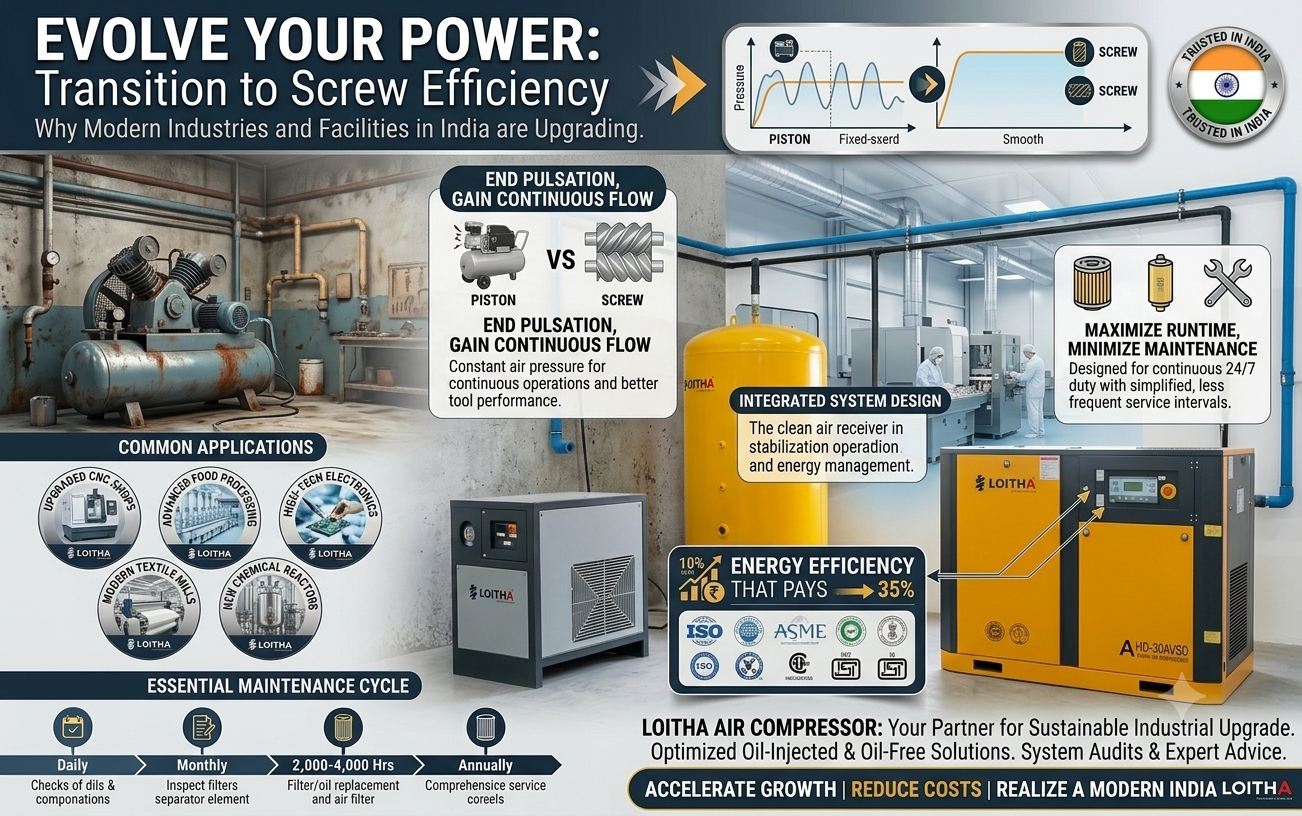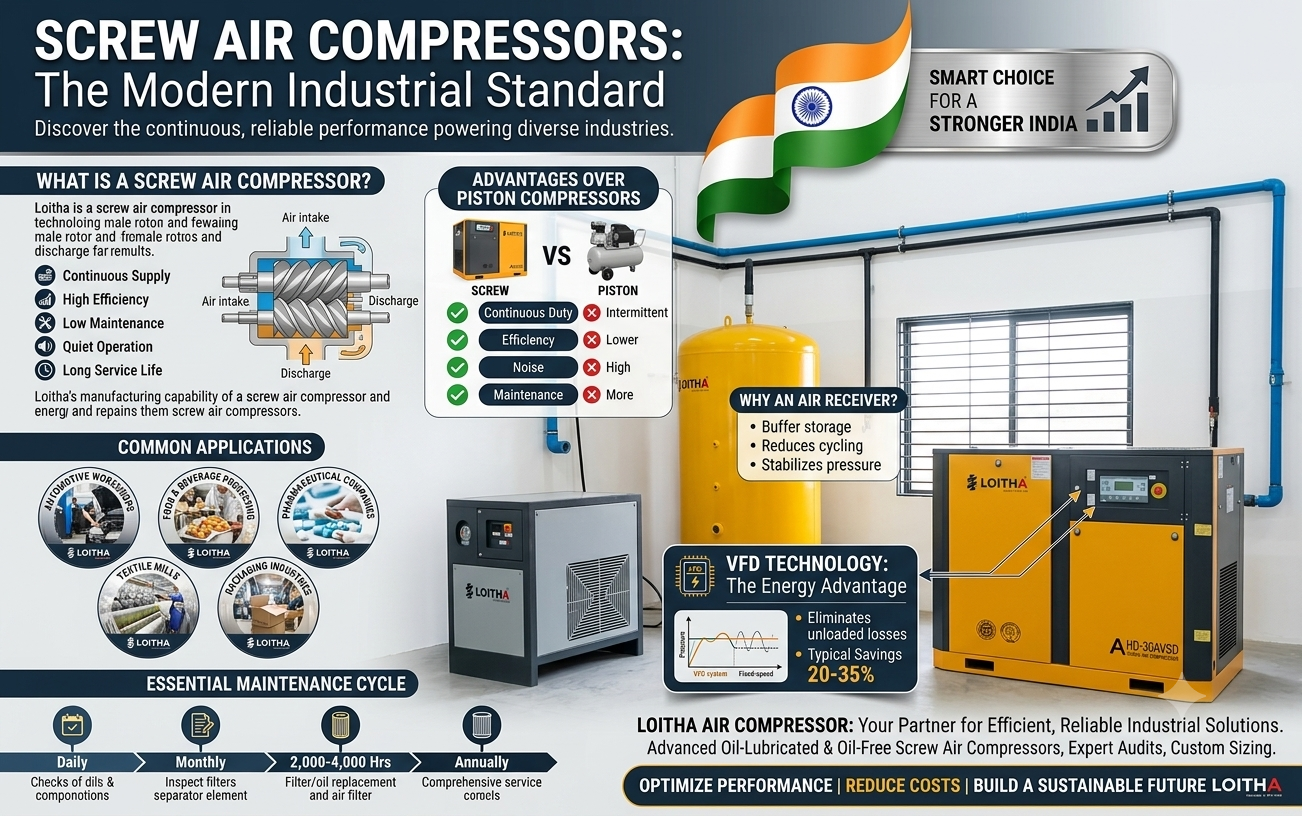
Why Your Compressed Air System Needs Air Dryer
Compressed air powers modern industry. From small automotive workshops to massive pharmaceutical plants, it is the invisible muscle behind countless operations. However, many businesses overlook a silent, system-wrecking threat: moisture.
When atmospheric air is compressed, water vapor naturally condenses into liquid water. If left unchecked, this moisture corrodes piping, ruins pneumatic tools, and contaminates end products.
An air dryer for your compressor is the definitive solution to this problem. In this complete guide, Loitha Air Compressor breaks down everything you need to know about selecting, operating, and maintaining the right air dryer for your system.
What is an Air Dryer and Why Does It Matter?
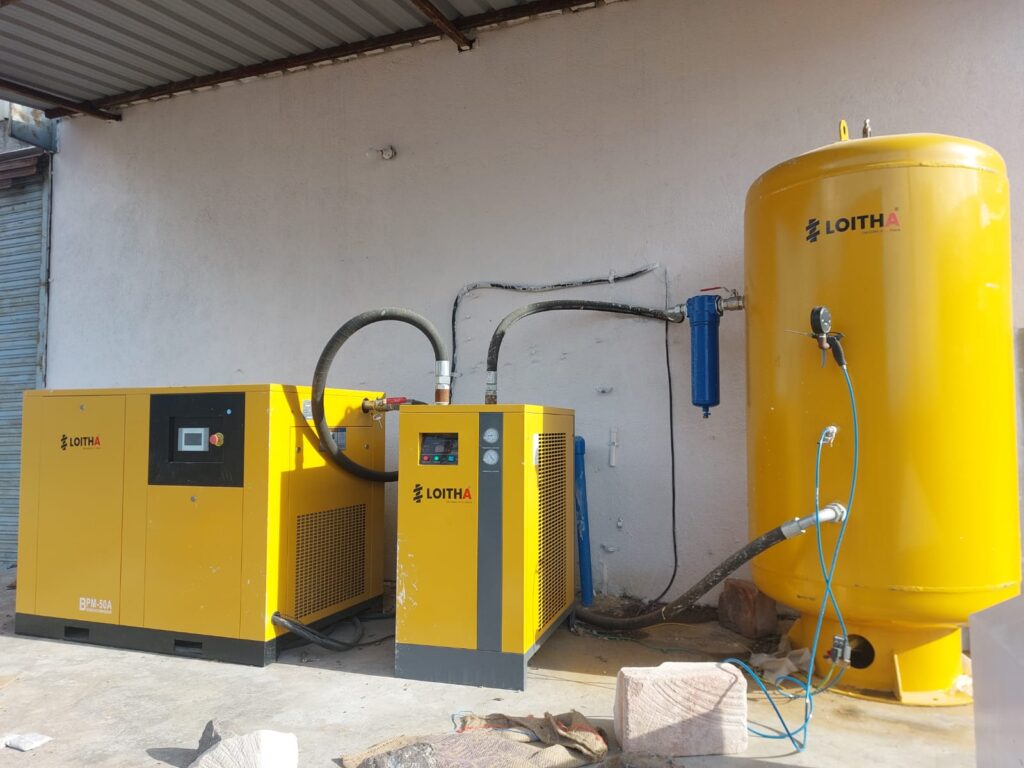
An air dryer is a filtration system installed directly after your air compressor. Its primary job is to strip moisture from the compressed air before it ever reaches your pneumatic tools, CNC machinery, or production lines.
Without an air dryer, moisture creates a ripple effect of costly industrial headaches:
- Rust and Corrosion: Water destroys the interior of your pipelines and air receiver tanks.
- Equipment Damage: Sludge and rust wear down internal seals in pneumatic cylinders and valves.
- Product Contamination: Moisture ruins paint finishes, spoils food processing batches, and shorts out delicate electronics.
- Spike in Overhead: Clogged filters, frequent tool replacements, and unexpected downtime drive up your maintenance costs.
Types of Industrial Air Dryers
Choosing the right type of air dryer depends entirely on your specific industry standards and how dry your air needs to be. The two primary industrial options are:
1. Refrigerated Air Dryers
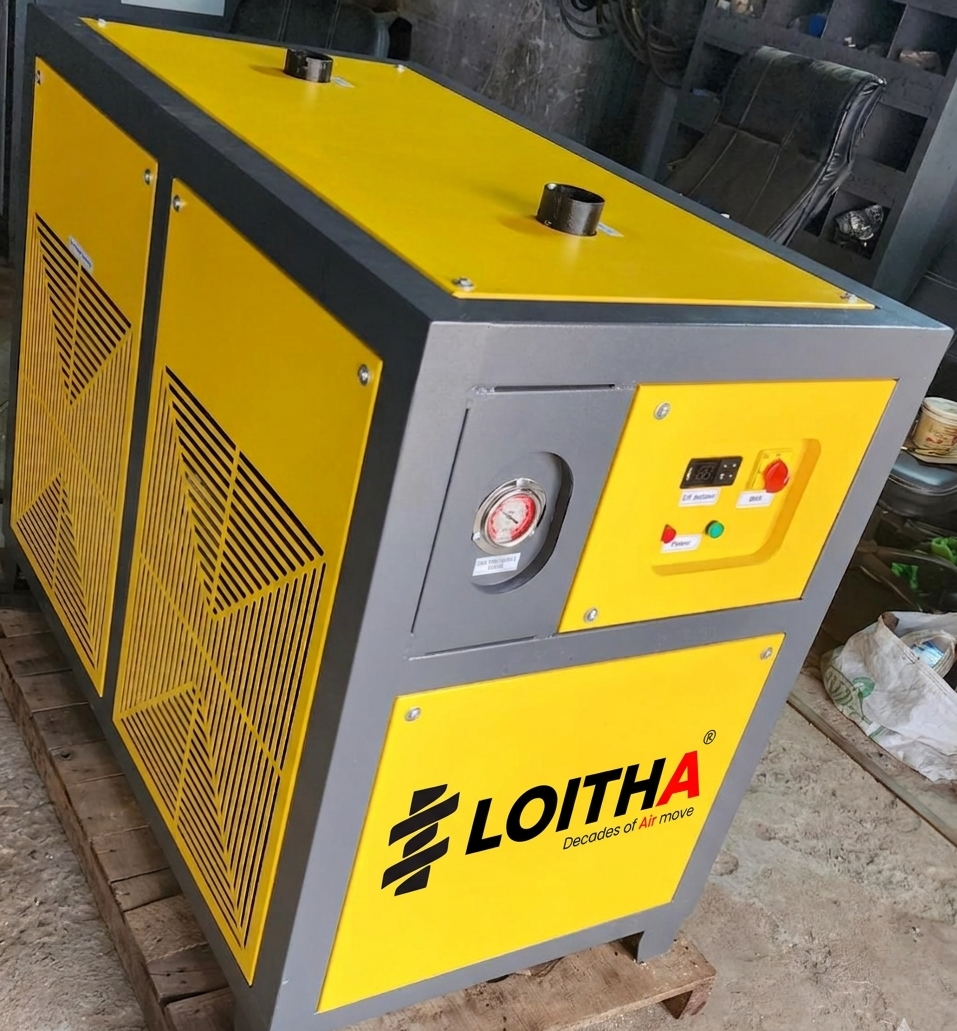
Refrigerated air dryers work much like a standard home refrigerator or air conditioner. They cool the incoming compressed air to roughly 3°C to 5°C (37°F to 41°F). This rapid cooling causes the water vapor to condense into liquid drops, which are then automatically discharged through a drain valve.
- Best For: General manufacturing, CNC machining, automotive workshops, packaging, and assembly lines.
- Key Advantages: Highly cost-effective, low maintenance, energy-efficient, and perfectly adequate for the vast majority of industrial applications.
2. Desiccant Air Dryers
Desiccant dryers utilize moisture-absorbing materials (like molecular sieve or activated alumina) to chemically scrub water vapor out of the airstream. They can achieve incredibly low Pressure Dew Points (PDP) down to -40 celsius or even -70 celsius.
- Best For: Pharmaceutical labs, food and beverage processing, electronics manufacturing, chemical plants, and outdoor piping systems exposed to freezing climates.
- Key Advantages: Delivers ultra-dry, pristine compressed air essential for strictly regulated or hyper-sensitive processes.
Key Benefits of Installing an Air Dryer
Investing in a high-quality air dryer yields immediate returns across your entire production floor:
- Extended Equipment Life: Eliminating water prevents corrosion, keeping your valves, cylinders, and compressors running smoothly for years.
- Flawless Product Quality: Whether you are spray-painting a vehicle or packaging pharmaceuticals, dry air ensures a pure, contaminant-free environment.
- Drastically Lower Maintenance Costs: Fewer rusty pipes and clogged filters mean less money spent on replacement parts and emergency technician calls.
- Boosted Energy Efficiency: Clean, dry pipelines experience fewer pressure drops, allowing your compressor to run more efficiently and save on electricity.
How to Choose the Right Size Dryer
An undersized air dryer will quickly become overwhelmed, allowing water to bleed into your lines. Before buying, make sure you evaluate these core metrics:
- Airflow Capacity (CFM / m3/min): Your dryer must match or slightly exceed the maximum cubic feet per minute (CFM) output of your air compressor.
- Operating Pressure (Bar / PSI): Ensure the dryer can safely handle your system’s maximum pressure.
- Required Dew Point: Determine how dry your application truly needs to be (e.g., standard manufacturing vs. cleanroom standards).
- Ambient and Inlet Temperatures: High ambient room temperatures or scorching air directly out of the compressor pump require heavier-duty drying capacity.
Pro Maintenance Tips for Peak Efficiency
To ensure your air dryer consistently delivers clean air and maintains its lifespan, implement these quick maintenance habits:
- Inspect Automatic Drains Daily: If the automatic condensate drain gets stuck or clogged, water will back up straight into your air lines.
- Clean the Condenser Coils: For refrigerated dryers, keep the cooling fins free of dust and debris to prevent overheating.
- Monitor Filter Elements: Replace pre-filters and post-filters on schedule to prevent pressure drops and contaminant bypass.
- Ensure Proper Ventilation: Air dryers generate heat. Make sure there is plenty of open space around the unit for air to circulate freely.
Partner with Loitha Air Compressor
An air compressor alone cannot guarantee the air quality your business demands. At Loitha Air Compressor, we provide complete, end-to-end compressed air solutions designed to protect your machinery and streamline your productivity.
Why Choose Us?
- High-Efficiency Screw Air Compressors engineered for heavy industrial environments.
- Energy-Saving Refrigerated Air Dryers built for rugged reliability.
- Premium In-Line Air Filters to trap oil aerosols and particulate matter.
- Professional On-Site Installation & Support from expert technical teams.
- Genuine Spare Parts & Reliable After-Sales Service to keep your downtime to zero.
Don’t let moisture compromise your tools, products, and profits. Contact the team at Loitha Air Compressor today to find the perfect air dryer setup for your facility.
📞 Call: +91 9601415434
📧 Email: info@loitha.com
🌐 Website: www.loitha.com
📱 Follow Us:
Facebook: LothAir/ | Instagram: /loitha_Air/ | YouTube: @LOITHAAir