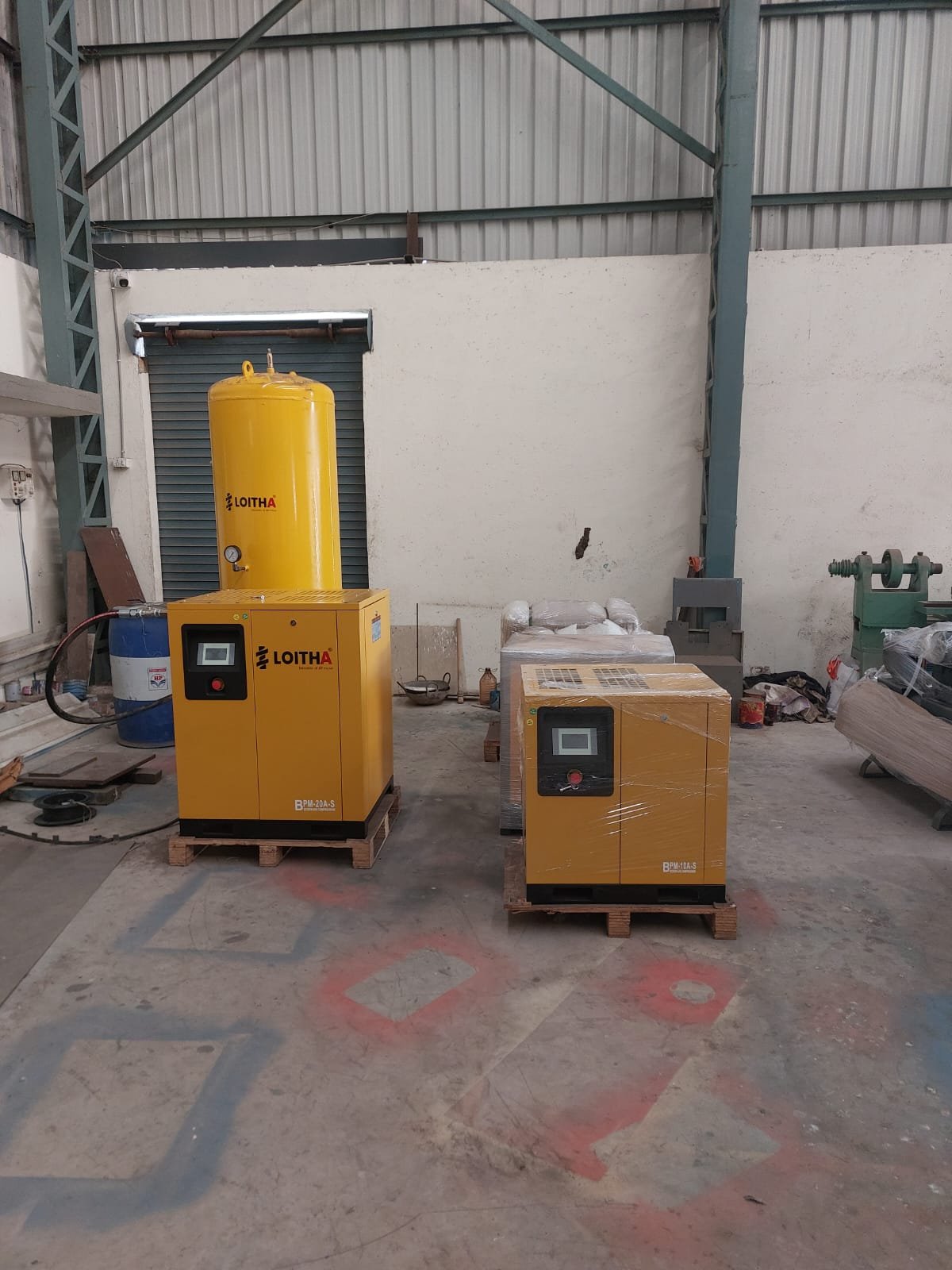
Role of Screw Air Compressor in Automation: The Backbone of Modern Industry
In today’s fast-paced industrial environment, automation has become the key driver of productivity, precision, and efficiency. From automotive manufacturing to food processing, from pharmaceuticals to electronics — automation systems have revolutionized how industries operate.
However, behind the seamless operation of automated machinery lies an unsung hero — the screw air compressor. This powerful device forms the heart of countless automation systems, providing clean, consistent, and reliable compressed air that drives pneumatic tools, robotic arms, conveyors, and other automated processes.
In this detailed blog, we’ll explore the role of screw air compressors in automation, their working principles, advantages, applications, and why they are an indispensable component in the modern industrial landscape.

In the age of Industry 4.0, where precision, speed, and continuous operation are non-negotiable, the seemingly simple air compressor has evolved into a sophisticated, indispensable workhorse. Far from being just a source of power, the screw air compressor is the silent, beating heart of industrial automation, driving everything from robotic arms to precision measuring tools.
This blog delves into the critical and often underappreciated role these machines play in modern automated manufacturing, highlighting the features that make them essential for maximizing productivity and achieving significant energy efficiency.
The Automation Backbone: Why Air is the Fourth Utility
In any modern factory, three utilities are obvious: electricity, water, and gas. The often-overlooked fourth utility is compressed air. It provides the force for countless operations:
- Pneumatic Tools and Cylinders: Powering robotic grippers, clamps, actuators, and positioners on assembly lines.
- Material Conveying: Moving powders, grains, and small parts through production lines.
- Blow-off and Cleaning: Essential in electronics, pharmaceuticals, and food processing for dust and debris removal.
- Control Systems: Operating valves and control actuators in process industries like chemical and oil & gas.
While other compressor types exist, the rotary screw air compressor has become the industry standard for automation. Why? Because automation demands a power source that is not just powerful, but above all, reliable and consistent.
Consistency and Continuous Flow: The Screw Compressor Advantage
The core of automation relies on repeatability and continuous runtime. Fluctuations in air pressure can lead to misaligned parts, inconsistent spray coatings, or machinery downtime—all killers of production efficiency.
1. Unwavering, Continuous Airflow
Unlike traditional piston (reciprocating) compressors, which operate in an intermittent, start-stop manner, the rotary screw design uses a male and female rotor to continuously trap and compress air.
- Positive Displacement: This mechanism ensures a steady, uninterrupted flow of compressed air with minimal pressure ripple.
- Precision Control: This consistency is vital for applications requiring exacting standards, such as atomizing paints in an automotive paint booth or controlling cleanroom pressure in pharmaceuticals.
2. Designed for 24/7 Operation
Automated manufacturing lines often run around the clock. Screw compressors are engineered for heavy-duty, continuous operation without the frequent rest periods required by piston models. Their design, which uses oil injection (or advanced cooling in oil-free models) for cooling and lubrication, allows them to maintain stable operating temperatures, preventing overheating and extending component life.
The Core Role of Screw Air Compressors in Automation
1. Powering Pneumatic Systems
Automation heavily relies on pneumatic systems — systems that use compressed air to generate motion and power. Pneumatics are used in:
- Robotic arms for assembly lines
- Pick-and-place machines
- Air cylinders for packaging and bottling
- Sorting and labeling systems
A screw air compressor ensures that these systems receive a constant supply of air at the right pressure, ensuring smooth, uninterrupted operations.
2. Ensuring Consistency and Reliability
In automation, consistency is everything. Any fluctuation in air pressure can cause process inefficiencies, defects, or downtime. Screw compressors are engineered for:
- Continuous duty cycles
- Stable air output
- Minimal vibration and noise
This reliability ensures that automated machines run at peak efficiency with minimal maintenance interruptions.
3. Reducing Energy Consumption
Modern screw compressors come with Variable Speed Drives (VSD) and smart control systems that adjust motor speed according to air demand.
This not only saves energy but also extends the compressor’s lifespan — a crucial advantage in automation plants where power costs form a major portion of operational expenses.
4. Enhancing Product Quality
- No contamination
- Consistent air purity (ISO Class 0)
- Compliance with industry standards
In industries like pharmaceuticals, electronics, and food processing, the quality of compressed air directly affects product quality. Oil-free screw air compressors ensure:
By maintaining air purity and pressure stability, they help achieve uniform product quality and reduce waste.
5. Supporting Smart Factory and Industry 4.0
As industries move toward Industry 4.0 — the integration of IoT, data analytics, and automation — screw air compressors have evolved too.
Modern models are equipped with:
- IoT-enabled monitoring systems
- Remote diagnostics
- Predictive maintenance alerts
These intelligent features help reduce unplanned downtime, optimize performance, and provide actionable data for process improvement.
Applications of Screw Air Compressors in Automated Industries
| Industry | Automation Application | Compressor Role |
| Automotive | Robotic assembly, painting, tire inflation | Continuous air for robotic tools and painting booths |
| Food & Beverage | Packaging, bottling, labeling | Oil-free compressed air for contamination-free production |
| Pharmaceuticals | Tablet coating, filling, and packaging | Clean air ensures hygiene and precision |
| Electronics | Circuit assembly, pick-and-place systems | Stable air for high-precision automated equipment |
| Textile | Spinning, weaving, dyeing | Reliable air for loom and process control |
| Cement & Construction | Conveying and material handling | Power for pneumatic conveying systems |
Benefits of Using Screw Air Compressors in Automation
- High Efficiency: Continuous air supply increases process efficiency.
- Low Maintenance: Fewer moving parts mean reduced wear and tear.
- Compact Design: Space-saving designs fit easily in automated plants.
- Energy Savings: Smart controls reduce energy waste.
- Quiet Operation: Lower noise levels improve workplace comfort.
- Long Service Life: Built for heavy-duty, round-the-clock performance.
Energy Efficiency and Smart Integration: The VSD Revolution
Energy consumption is one of the largest operating costs in manufacturing. Modern industrial automation systems are built to minimize waste, and the air compressor must follow suit. This is where Variable Speed Drive (VSD) technology transforms the screw compressor into a truly “smart” piece of equipment.
The Power of VSD Technology
A fixed-speed compressor constantly runs at full power, regardless of the actual air demand. If the demand fluctuates (which is common in automated lines), the excess power is wasted.
- Matching Demand: A VSD screw air compressor automatically adjusts its motor speed to precisely match the system’s real-time air demand.
- Significant Cost Savings: By only using the power required, VSD technology can deliver energy savings of up to 35% or more compared to fixed-speed units, drastically lowering operational costs and reducing the carbon footprint.
Seamless Integration with Central Control
Modern screw compressors are equipped with advanced, often cloud-connected, controllers.
- Intelligent Monitoring: These control systems monitor key metrics like pressure, temperature, and energy use in real-time.
- Predictive Maintenance: By integrating with the factory’s central automation system (SCADA/PLC), the compressor can anticipate demand shifts, self-optimize, and even flag potential issues before they cause costly downtime—a huge win for manufacturing productivity.
Future of Screw Air Compressors in Automation
The future is moving toward smart, energy-efficient, and sustainable automation. Screw air compressors will continue to play a pivotal role, integrating with AI and IoT technologies to:
- Predict maintenance needs
- Optimize energy consumption
- Provide real-time operational analytics
This integration will make automation systems even more reliable, eco-friendly, and cost-effective.
Conclusion
The screw air compressor is more than just a machine — it is the lifeblood of automation. Its ability to deliver continuous, reliable, and clean compressed air makes it indispensable across all automated industries.
As industries evolve, investing in a high-quality screw air compressor will not only improve operational efficiency but also enhance productivity, reduce energy costs, and ensure long-term sustainability.
Whether you are designing a new automation system or upgrading your existing plant, make sure to choose a trusted screw air compressor brand that matches your specific industrial requirements.
Are you ready to optimize your production line? Investing in a smart, energy-efficient screw air compressor system is the single most effective step toward boosting your factory’s productivity and reducing your total cost of ownership, Choose Loitha Air Compressors — Powering Progress, Sustaining Productivity.
Your Trusted Rotary Screw Air Compressor Partner Contact to Loitha
📞 Call: +91 9601415434
📧 Email: info@loitha.com
🌐 Website: www.loitha.com
📱 Follow Us:
Facebook: LothAir/ | Instagram: /loitha_Air/ | YouTube: @LOITHAAir